

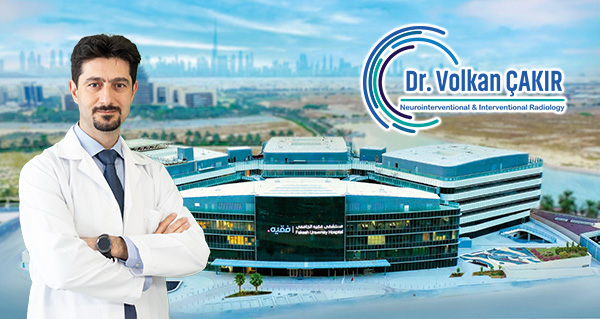
Dr. Volkan Çakır is a highly experienced Specialist in Interventional Radiology with over 15 years of experience. He completed his medical education at Dokuz Eylül University, School of Medicine, and further specialized in radiology. Dr. Çakır has held prominent positions such as Head of the Interventional Radiology Department and Associate Professor at reputed institutions in Turkey.

Transarterial Chemoembolization (TACE): A Precision-Based Interventional Oncology Approach for Liver Tumors
Transarterial Chemoembolization (TACE) is a well-established, image-guided interventional oncology procedure widely used in the management of primary and secondary liver malignancies. This minimally invasive technique enables targeted delivery of chemotherapeutic agents directly to hepatic tumors while simultaneously inducing ischemia by selectively occluding tumor-feeding arteries.
TACE is based on the unique vascular anatomy of liver tumors, which predominantly derive their blood supply from the hepatic arterial system, unlike normal liver parenchyma that is mainly supplied by the portal vein. This physiological difference allows interventional radiologists to selectively target tumor tissue while preserving healthy liver function.
Procedural Technique and Mechanism of Action
The TACE procedure is performed under fluoroscopic and angiographic guidance. Through a small percutaneous arterial access—most commonly via the femoral or radial artery—a microcatheter is advanced selectively into the hepatic arteries supplying the tumor. Once optimal positioning is achieved, a high concentration of chemotherapeutic agents is administered directly into the tumor vasculature.
Following chemotherapy infusion, embolic materials such as microspheres or particles are delivered to obstruct the arterial blood flow feeding the tumor. This dual mechanism:
Enhances local cytotoxic effects of chemotherapy
Induces prolonged ischemia
Limits tumor growth and progression
Minimizes systemic drug exposure
As a result, TACE achieves high intratumoral drug concentrations while significantly reducing systemic toxicity compared to conventional intravenous chemotherapy.
Clinical Indications and Patient Selection
Transarterial Chemoembolization is most commonly indicated for:
Hepatocellular carcinoma (HCC), particularly intermediate-stage disease (BCLC stage B)
Liver-dominant metastatic disease (e.g., neuroendocrine tumors, colorectal cancer metastases)
Patients who are not candidates for surgical resection or liver transplantation
Tumor downstaging or bridging therapy prior to transplantation
Careful patient selection is essential and is based on liver function, tumor burden, vascular anatomy, and overall clinical status. When appropriately applied, TACE has been shown to significantly improve local tumor control and overall survival while preserving residual liver function.
Advantages of TACE as a Minimally Invasive Therapy
✔ Targeted, catheter-based treatment
✔ Preservation of non-tumorous liver tissue
✔ Reduced systemic chemotherapy-related adverse effects
✔ Shorter hospitalization and faster post-procedure recovery
✔ Repeatable treatment option when clinically indicated
✔ Improved symptom control and quality of life
Expertise at Fakeeh University Hospital
At Fakeeh University Hospital, Transarterial Chemoembolization procedures are performed by Dr. Volkan CAKIR, an experienced Interventional Radiologist with advanced expertise in interventional oncology and EBIR certification.
Dr. Volkan CAKIR applies evidence-based protocols and state-of-the-art imaging technologies to ensure procedural precision, safety, and optimal therapeutic outcomes. Each patient undergoes a comprehensive multidisciplinary evaluation, allowing for individualized treatment planning tailored to tumor characteristics and patient-specific clinical parameters.
Fakeeh University Hospital is equipped with advanced angiography suites and modern interventional infrastructure, enabling the delivery of high-quality, internationally standardized liver cancer treatments within a patient-centered care environment.
Conclusion
Transarterial Chemoembolization represents a cornerstone therapy in modern liver cancer management, offering an effective, targeted, and organ-preserving treatment option for patients with complex hepatic malignancies. Under the expert care of Dr. Volkan CAKIR, patients benefit from advanced interventional oncology techniques that prioritize precision, safety, and long-term clinical outcomes.
📩 For a comprehensive evaluation and personalized treatment consultation regarding TACE, please contact us.
Dr. Volkan CAKIR
Assoc. Professor, EBIR
Neurointerventional & Interventional Radiologist
 Questions and Answers<

Interventional Radiology (IR) is a medical specialty that uses minimally invasive imaging techniques, such as X-rays, CT scans, and ultrasound, to guide procedures. These procedures can treat a wide range of conditions, such as cancer, cardiovascular disease, and certain infections, without the need for traditional surgery.
Interventional Neuroradiology (INR) is a subspecialty of radiology that focuses on the diagnosis and treatment of conditions affecting the brain, spine, and neck using minimally invasive techniques. Procedures in INR are guided by advanced imaging techniques such as angiography, CT, and MRI.