

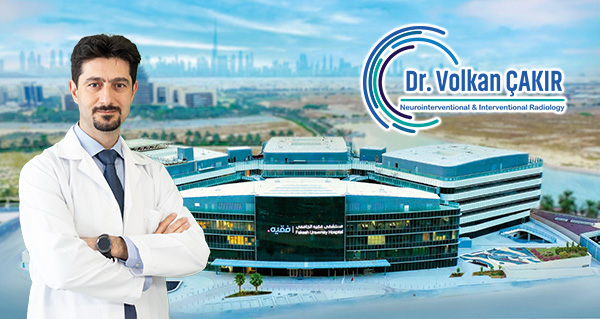
Dr. Volkan Çakır is a highly experienced Specialist in Interventional Radiology with over 15 years of experience. He completed his medical education at Dokuz Eylül University, School of Medicine, and further specialized in radiology. Dr. Çakır has held prominent positions such as Head of the Interventional Radiology Department and Associate Professor at reputed institutions in Turkey.

Advanced Minimally Invasive Solutions for Complex Cerebrovascular Conditions
Neuroendovascular diseases encompass a wide range of disorders affecting the blood vessels of the brain, head and neck, and spinal cord. These conditions can be life-threatening or severely disabling if left untreated. Thanks to rapid advancements in neurointerventional medicine, many of these diseases can now be managed safely and effectively using minimally invasive endovascular techniques, avoiding the need for open brain surgery.
Neuroendovascular therapy represents a critical intersection of neurology, neurosurgery, and interventional radiology, offering precision-based treatments that significantly improve patient outcomes and quality of life.
What Are Neuroendovascular Diseases?
Neuroendovascular diseases are conditions that involve abnormal blood flow, weakened vessel walls, blockages, or abnormal connections within the cerebral and spinal vascular systems. Common neuroendovascular conditions include:
Intracranial and extracranial aneurysms
Acute ischemic stroke caused by large vessel occlusion
Arteriovenous malformations (AVMs)
Dural arteriovenous fistulas (DAVFs)
Carotid and intracranial artery stenosis
Cerebral venous thrombosis
Vascular tumors and malformations of the brain and spine
Many of these disorders may remain silent for years before presenting with symptoms such as headaches, seizures, neurological deficits, or sudden stroke. Early diagnosis and timely intervention are crucial to preventing permanent brain damage or fatal complications.
What Is Neuroendovascular Treatment?
Neuroendovascular treatment is a minimally invasive approach that allows specialists to access the brain’s blood vessels through a small puncture, typically in the groin or wrist. Using real-time imaging and ultra-thin microcatheters, physicians can navigate safely through the vascular system to reach the affected area with remarkable accuracy.
Depending on the condition, treatment may involve:
Coiling or flow diversion for aneurysms
Mechanical thrombectomy for acute stroke
Embolization of AVMs or fistulas
Angioplasty and stenting for narrowed arteries
Targeted embolization of vascular tumors
These procedures are performed without large incisions, significantly reducing trauma to the patient.
Advantages of Neuroendovascular Therapy
Compared to traditional open neurosurgery, neuroendovascular interventions offer multiple benefits:
Minimally invasive techniques
Lower procedural risk
Reduced anesthesia time
Shorter hospital stays
Faster neurological recovery
Less postoperative pain
Lower complication rates
Preservation of healthy brain tissue
For many patients, these advantages translate into quicker return to daily activities and improved long-term neurological outcomes.
Neuroendovascular Treatment for Stroke
One of the most impactful applications of neuroendovascular therapy is in the treatment of acute ischemic stroke. Mechanical thrombectomy has become the gold standard for patients with large vessel occlusion, allowing rapid removal of the clot and restoration of blood flow to the brain.
When performed within the appropriate time window by an experienced neurointerventional specialist, thrombectomy can:
Dramatically reduce disability
Improve survival rates
Restore independence in daily life
Time is brain, and access to advanced neuroendovascular stroke care can be life-saving.
Expertise and Personalized Care
Successful treatment of neuroendovascular diseases requires not only advanced technology but also highly specialized expertise. Each patient’s condition is unique, and treatment strategies must be carefully tailored based on anatomy, disease complexity, and overall health status.
Under the expert care of Dr. Volkan CAKIR, patients at Fakeeh University Hospital benefit from comprehensive neurointerventional services supported by modern imaging systems, multidisciplinary collaboration, and evidence-based treatment protocols.
Dr. Cakir’s approach emphasizes:
Accurate diagnosis
Individualized treatment planning
High procedural success rates
Patient safety and long-term outcomes
A Comprehensive Neuroendovascular Center
At Fakeeh University Hospital, neuroendovascular care is delivered within a fully equipped, modern medical environment that prioritizes excellence, innovation, and compassionate patient-centered care. The hospital’s infrastructure allows for rapid diagnosis, emergency interventions, and seamless coordination between neurology, neurosurgery, and intensive care teams.
When to Seek Neuroendovascular Evaluation
You should consider consulting a neurointerventional specialist if you or a loved one has:
Sudden neurological symptoms or stroke signs
Known brain aneurysm or vascular malformation
Unexplained seizures or chronic headaches
Carotid artery disease
Previously diagnosed cerebrovascular abnormalities requiring follow-up
Early evaluation can prevent severe complications and open the door to less invasive treatment options.
Conclusion
Neuroendovascular diseases no longer require highly invasive surgical approaches in many cases. With modern minimally invasive techniques, precise imaging, and expert hands, complex cerebrovascular conditions can be treated safely and effectively.
If you are seeking advanced care for neuroendovascular diseases, personalized consultation and timely intervention can make a life-changing difference.
Dr. Volkan CAKIR
Assoc. Professor, EBIR
Neurointerventional & Interventional Radiologist
 Questions and Answers<
Interventional Radiology (IR) is a medical specialty that uses minimally invasive imaging techniques, such as X-rays, CT scans, and ultrasound, to guide procedures. These procedures can treat a wide range of conditions, such as cancer, cardiovascular disease, and certain infections, without the need for traditional surgery.
Interventional Neuroradiology (INR) is a subspecialty of radiology that focuses on the diagnosis and treatment of conditions affecting the brain, spine, and neck using minimally invasive techniques. Procedures in INR are guided by advanced imaging techniques such as angiography, CT, and MRI.