

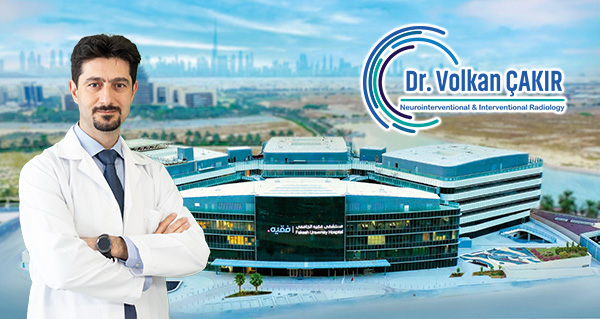
Dr. Volkan Çakır is a highly experienced Specialist in Interventional Radiology with over 15 years of experience. He completed his medical education at Dokuz Eylül University, School of Medicine, and further specialized in radiology. Dr. Çakır has held prominent positions such as Head of the Interventional Radiology Department and Associate Professor at reputed institutions in Turkey.

Radiofrequency ablation (RFA) is an advanced, minimally invasive treatment option designed to manage benign thyroid nodules effectively without the need for surgery. With the growing demand for non-surgical solutions, RFA has become an increasingly preferred technique among patients and physicians seeking safe, precise, and cosmetically favorable outcomes.
Thyroid nodules are common growths that develop within the thyroid gland, located at the front of the neck. While most nodules are benign (non-cancerous), they can sometimes cause symptoms depending on their size, location, or activity.
Patients with thyroid nodules may experience:
A visible lump or swelling in the neck
A sensation of pressure or fullness
Difficulty swallowing or breathing
Voice changes
Hormonal imbalances in some cases
Although many nodules do not require immediate treatment, intervention becomes necessary when they grow, cause symptoms, or create cosmetic concerns.
Radiofrequency ablation is a non-surgical, image-guided procedure that uses thermal energy to reduce the size of thyroid nodules. The technique involves inserting a thin, specialized needle (electrode) directly into the nodule under continuous ultrasound guidance.
Once positioned accurately, radiofrequency energy generates heat, which destroys targeted nodule tissue. Over time, the treated tissue is naturally absorbed by the body, leading to a significant reduction in nodule volume.
Unlike traditional surgery, RFA preserves the surrounding healthy thyroid tissue, maintaining normal gland function.
Radiofrequency ablation is particularly suitable for patients with:
Benign thyroid nodules confirmed by biopsy
Nodules causing cosmetic concerns
Nodules leading to compressive symptoms such as discomfort or swallowing difficulty
Patients who wish to avoid surgery or are not ideal surgical candidates
Selected cases of autonomously functioning thyroid nodules
A thorough evaluation, including ultrasound imaging and fine-needle aspiration biopsy, is essential before determining eligibility for the procedure.
RFA is typically performed in an outpatient setting and does not require general anesthesia. The procedure involves the following steps:
Pre-procedure assessment: Detailed ultrasound examination and planning
Local anesthesia: The treatment area is numbed to ensure patient comfort
Needle placement: A thin electrode is inserted into the thyroid nodule under real-time ultrasound guidance
Ablation: Controlled heat is applied to destroy targeted tissue using the “moving-shot” technique
Completion: The electrode is removed, and the patient is monitored briefly before discharge
The entire procedure usually takes between 20 and 60 minutes, depending on the size and characteristics of the nodule.
RFA offers numerous advantages compared to conventional thyroid surgery:
Minimally invasive: No incisions or stitches
No visible scar: Ideal for patients concerned about neck aesthetics
Preservation of thyroid function: Reduces the need for lifelong hormone replacement
Low complication risk: Significantly safer than surgical alternatives in selected patients
Quick recovery: Most patients return to normal activities within a day
Same-day discharge: No hospitalization required
Effective results: Significant nodule shrinkage (often 50–80% or more over time)
After RFA, the treated nodule gradually shrinks over several weeks to months. Patients typically notice improvement in symptoms and cosmetic appearance within the first few months.
Follow-up includes periodic ultrasound evaluations to monitor:
Nodule volume reduction
Symptom improvement
Thyroid function
In some cases, additional sessions may be recommended for optimal results, particularly for larger nodules.
Radiofrequency ablation is considered a safe procedure when performed by experienced specialists. Complications are rare but may include:
Mild pain or discomfort
Temporary voice changes due to nerve irritation
Minor bleeding or bruising
Skin burns (very rare)
Careful technique and real-time imaging significantly minimize these risks.
Traditional thyroid surgery involves partial or total removal of the thyroid gland under general anesthesia. While effective, it carries certain disadvantages such as:
Surgical scars
Risk of hypothyroidism
Longer recovery time
Hospital stay
In contrast, RFA offers a non-surgical alternative that maintains thyroid integrity and allows patients to resume daily life quickly.
Radiofrequency ablation represents a major advancement in interventional radiology and thyroid care. It bridges the gap between observation and surgery, providing patients with a safe, effective, and less invasive solution.
For individuals seeking to avoid surgery while still addressing symptoms or cosmetic concerns, RFA is an excellent option supported by growing clinical evidence and international guidelines.
Each thyroid nodule case is unique and requires individualized evaluation. A comprehensive consultation ensures accurate diagnosis, appropriate patient selection, and optimal treatment planning.
If you are experiencing symptoms related to thyroid nodules or have been diagnosed with a benign thyroid lesion, radiofrequency ablation may be the right treatment for you.
For more information or to schedule a consultation, please contact our team. We are committed to providing advanced, patient-centered care using the latest minimally invasive technologies in thyroid treatment.
 Questions and Answers<

Interventional Radiology (IR) is a medical specialty that uses minimally invasive imaging techniques, such as X-rays, CT scans, and ultrasound, to guide procedures. These procedures can treat a wide range of conditions, such as cancer, cardiovascular disease, and certain infections, without the need for traditional surgery.
Interventional Neuroradiology (INR) is a subspecialty of radiology that focuses on the diagnosis and treatment of conditions affecting the brain, spine, and neck using minimally invasive techniques. Procedures in INR are guided by advanced imaging techniques such as angiography, CT, and MRI.